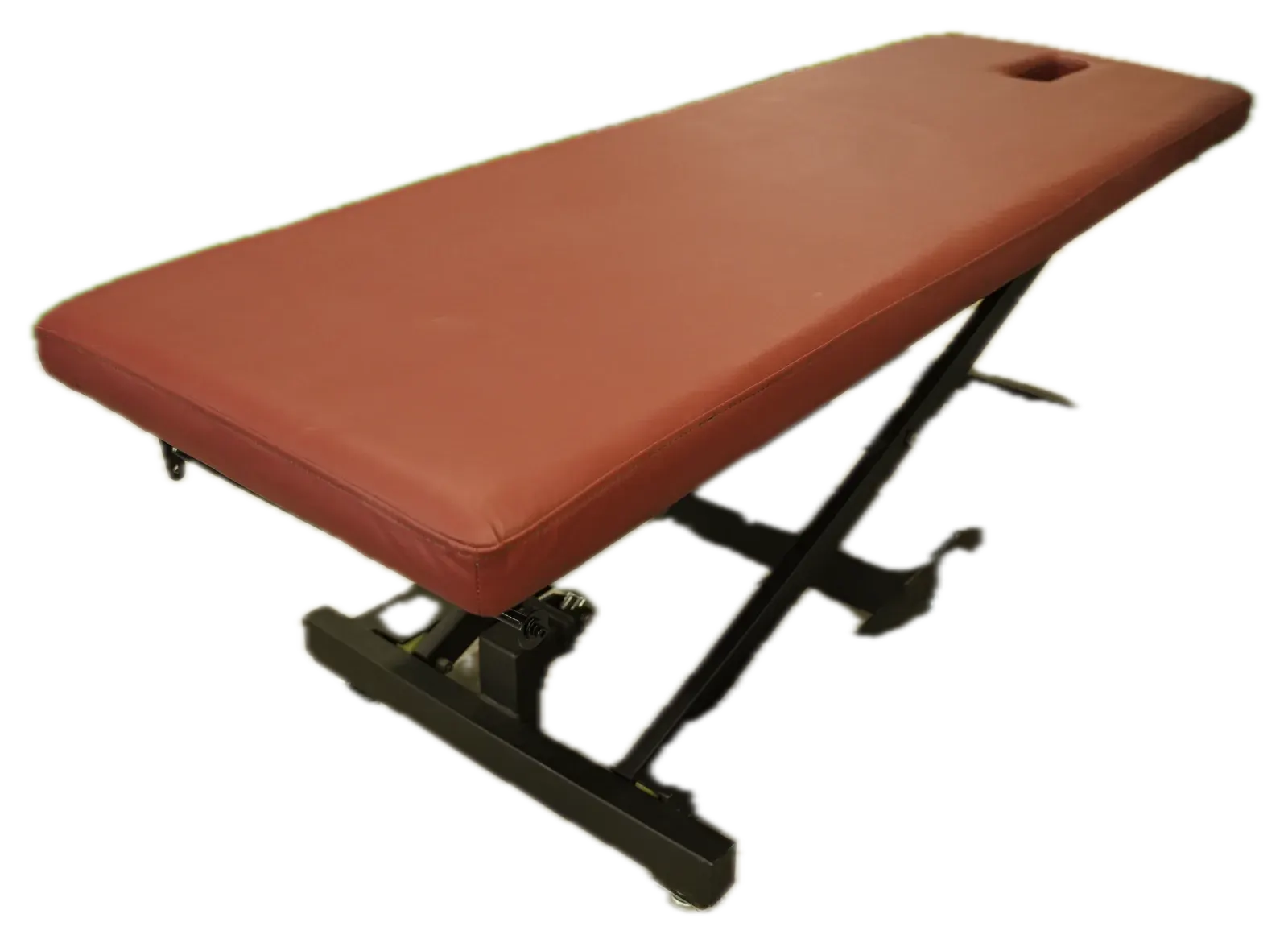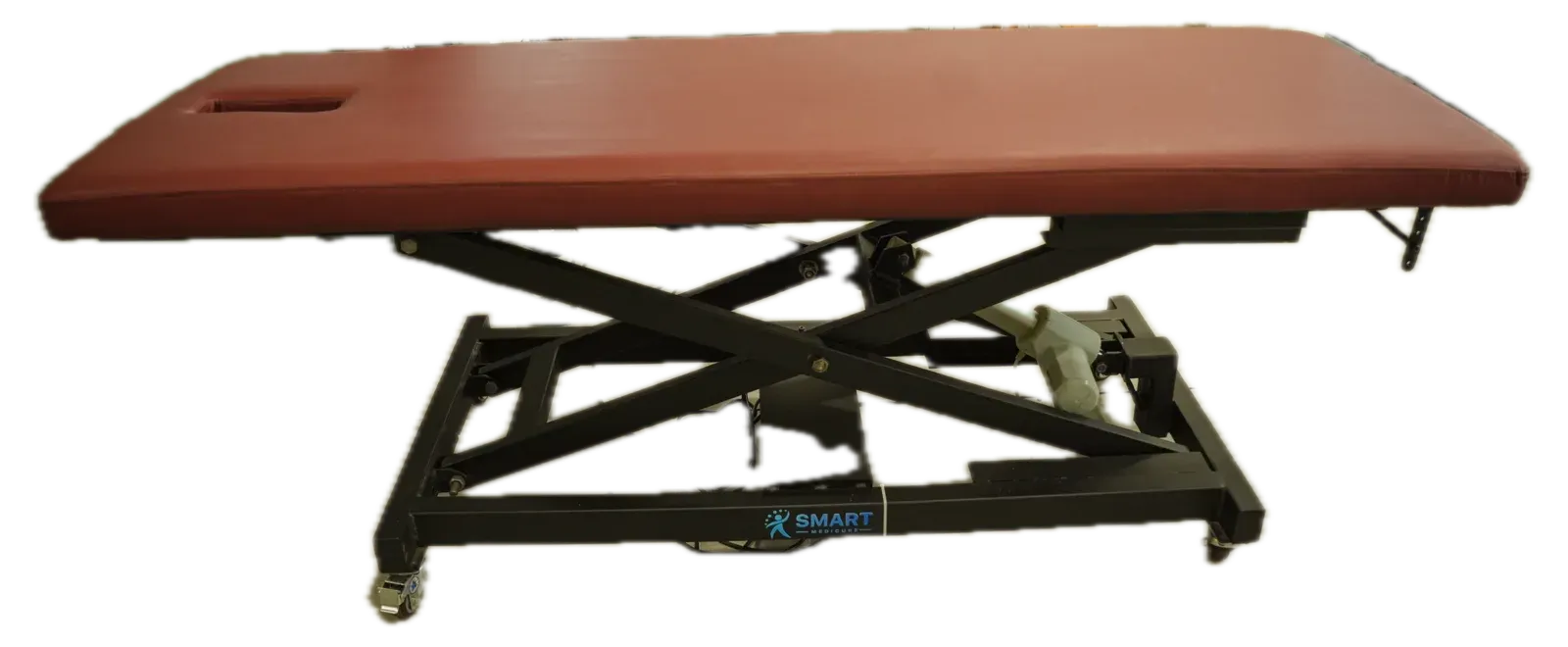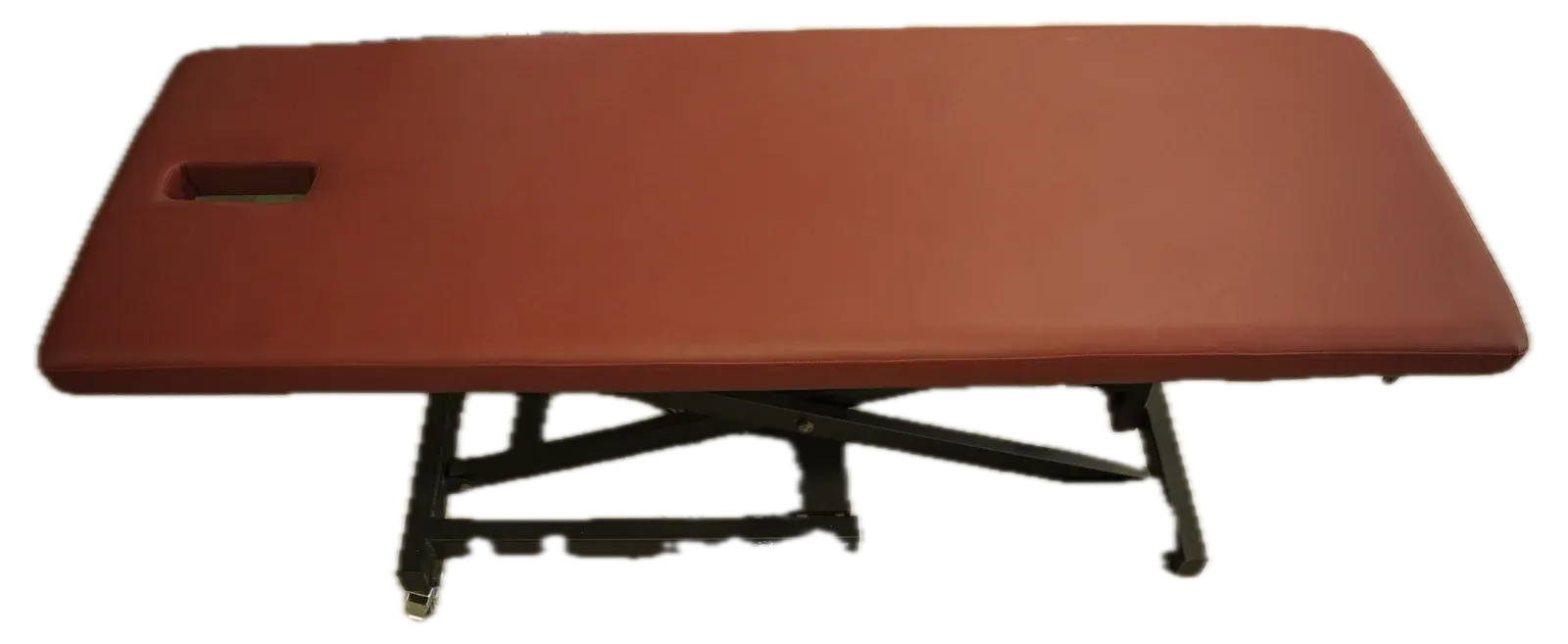
A physiotherapy table is used for assessment, manual therapy, exercise and electrotherapy, often by more than one therapist in a day. The right table is the one that puts every patient at the right height for the therapist without anyone straining.
Why electric height adjustment matters
Our electric tables move from 22 to 43 inches (about 560 to 1090 mm), controlled by a foot pedal so both hands stay free. At the low end, patients with limited mobility, older patients and post-operative patients can sit on the edge and then lie down. At the high end, a therapist can mobilise a knee or shoulder standing upright.
If several therapists share a room, the range matters even more: each one sets the table to their own height between patients.
Flat or 3-section
Flat hi-lo table. One continuous surface. It suits assessment, most manual therapy, exercise and electrotherapy. Our Electrical Height Adjustable Flat Multipurpose Treatment Table is built this way.
3-section table. Head, mid (lumbar) and leg sections, with a breathing hole in the head section so a patient lying face down can keep the neck straight. This layout suits clinics that apply traction or treat patients prone for long periods. See the 3-Section Physiotherapy Traction Table.
Feature | Flat hi-lo table | 3-section table |
|---|---|---|
Surface | One piece | Head, mid and leg sections |
Breathing hole | No | Yes |
Height | Electric, foot pedal, 22–43 in | Electric, 22–43 in |
Best for | General treatment, exercise, electrotherapy | Prone work, traction, spinal treatment |
Load rating | 200 kg | 200 kg |
Osteopaths who want a quiet electric table for manipulation can look at the Electrical Osteopathy Treatment Table, which has the same height range.
Size and room planning
Footprint. 6 ft long by 2 ft wide (about 1830 by 610 mm).
Working space. Leave room on both sides for the therapist and at one end for equipment such as an electrotherapy trolley.
Power. Electric tables need a standard socket nearby. Tell us your country so we can confirm the voltage.
Access. Measure doorways and corridors before delivery.
Mobility. Castors let you move the table for cleaning. Ask whether they lock.
Hygiene and upholstery
Tables are cleaned between every patient, so the surface has to take repeated wiping. We use Rexine upholstery over high-density foam, which wipes clean with a soft cloth and a mild, non-abrasive disinfectant. Harsh solvents shorten the life of any upholstery, so follow the cleaning instructions in the manual. Colour is your choice; darker colours hide wear longer in busy rooms.
Load rating and stability
Ask for the rated load in kilograms. Ours is 200 kg. A heavier steel frame with a powder-coated finish stays steady when a patient moves or a therapist leans in for a mobilisation, and resists chipping from cleaning chemicals.
Before you order: a checklist
Height range and how it is controlled.
Flat or 3-section, and whether you need a breathing hole.
Load rating.
Dimensions, room layout and doorways.
Power supply and voltage for your country.
Upholstery material, colour and replacement cushions.
Warranty and support. Ours is one year on manufacturing defects plus lifetime telephone support.
Delivery time. Ours is 15 to 30 days.
The maker's quality system. See what ISO 13485 means for buyers.
About the author
Dr Amit, Training and Support, Smart Medicure
Dr Amit leads training and support at Smart Medicure, helping clinics set up and use their tables and decompression systems.
Topics: physiotherapy, treatment tables, buying guide